For many people student life is a blast but the financial hangover isn’t so much fun. University debts are higher than ever and making the repayments on student loans can be even scarier when you’re self-employed.
Small business owners, contractors and freelancers will need to confirm the details of their student loan on their Self Assessment tax return. If this applies to you, we’ve put together a quick guide about repaying your student loan when you’re self-employed.
Do I need to include my student loan on my Self Assessment?
As well as making repayments towards your student loan through an employer, repayments can also be collected on self-employed income, even if it’s money you earn on the side. If you’re not expecting it, the extra amount on your tax bill can be a bit of a shock, so it’s worth being prepared!
Will I need to make a separate payment to the Student Loans Company?
No, once your submit your Self Assessment tax return any student loan repayments you owe as a result of it will be added to the final tax calculation. You’ll pay the whole amount to HMRC, and they’ll pass the part which relates to your loan on to the Student Loans Company who will update your records accordingly.
Do I need to complete a Self Assessment tax return?
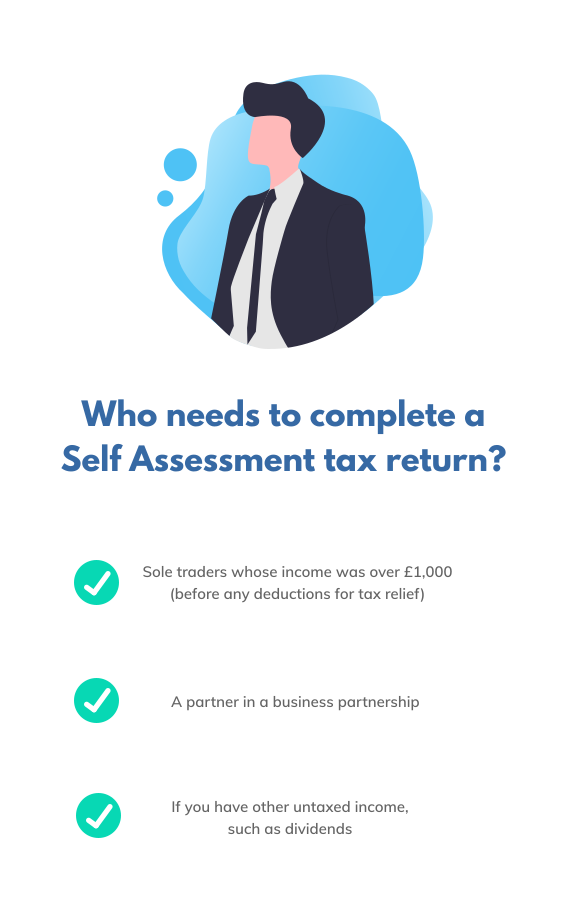
Each tax year runs from 6th April until 5th April. You will need to complete a Self Assessment in order to declare your income if at any point during the tax year you were:
- Self-employed as a ‘sole trader’, and your self-employment income was more than the £1,000 trading allowance (before deducting anything you can claim tax relief on)
- A partner in a business partnership
- Paid any other untaxed income, such as dividends
How much can I earn before I start repaying my student loan?
Rather than being worked out on your combined income, student loan repayments only kick in on jobs which pay more than the repayment threshold. For example, if you have two jobs, and only one of them pays more than the threshold for your plan, you’ll only make repayments on income you earn above the threshold for that job, not both.
The thresholds are different depending on whether you’re on Plan 1, Plan 2, Plan 4, or Plan 5. Your student loan repayment plan depends on when you started your course, and where. Some people have more than one repayment plan – for example if you studied more than one course, or if you went on to Postgraduate study.
Plan 1
You’re on Plan 1 if you’re:
- An English or Welsh student who started an undergraduate course anywhere in the UK before 1st September 2012
- A Northern Irish student who started an undergraduate or postgraduate course anywhere in the UK on or after 1st September 1998
- An EU student who started an undergraduate course in England or Wales on or after 1st September 1998, but before 1st September 2012
- An EU student who started an undergraduate or postgraduate course in Northern Ireland on or after 1st September 1998
Plan 2
You’re on Plan 2 if you’re:
- An English or Welsh student who started an undergraduate course anywhere in the UK on or after 1st September 2012
- An EU student who started an undergraduate course in England or Wales on or after 1st September 2012
- Someone who took out an Advanced Learner Loan on or after 1st August 2013
Plan 4
You’re on Plan 4 if you’re:
- A Scottish student who started an undergraduate or postgraduate course anywhere in the UK on or after 1st September 1998
- An EU student who started an undergraduate or postgraduate course in Scotland on or after 1st September 1998
Plan 5
You’re on Plan 5 if you started your course on or after 1 August 2023 and the course is:
- An undergraduate course
- A Postgraduate Certificate of Education (PGCE)
Repaying your student loan
The table shows how much you can earn (in a week, month, and tax year) according to each plan before starting to make student loan repayments. The amount you pay is a percentage of the income you earn above the threshold. The student loan repayment thresholds change 6th April every year and are published on the gov.uk website, but we’ve popped the 2026/27 thresholds and rates into a table below.
| Which Plan You’re On | Weekly Earnings Threshold | Monthly Earnings Threshold | Annual Earnings Threshold | Repayment Rate on Earnings Above Threshold |
| Plan 1 | £517 | £2,241 | £26,900 | 9% |
| Plan 2 | £565 | £2,448 | £29,385 | 9% |
| Plan 4 | £649 | £2,816 | £33,795 | 9% |
| Plan 5 | £480 | £2,083 | £25,000 | 9% |
| Postgraduate Loan | £403 | £1,750 | £21,000 | 6% |
How and when do I send a Self Assessment tax return?
If you complete your Self Assessment tax return online, you’ll need to submit it and pay your bill by 31st January following the end of the tax year that the return covers, though you can submit your return much earlier than that!
For example, any tax you owe for your 2025/26 Self Assessment is due for payment by 31st January 2027. If your tax bill is more than £1,000 then you might also need to make an advance payment towards the following tax year, known as making a payment on account.
If you have any questions around self-employed tax issues, our team are here to help. Find out more about our online accounting services, call 020 3355 4047 for a chat, or get an instant quote online.
Want to learn more?
Subscribe to our newsletter to get accounting tips like this right to your inbox