

What is Bookkeeping? The complete guide to keeping financial records for your business
Bookkeeping is an essential part of managing a business’s financial health, but it might seem confusing at first. Our guide explains the accounts jargon that might trip you up, and includes advice on how to get your bookkeeping right.
What is bookkeeping?
Bookkeeping is the process of recording transactions in your business. This sort of record keeping is a legal requirement, but it’s also a very useful way to keep track of how and when the business makes money, and what it expects to happen in the future.
Having regular bills to pay is a really good example of why bookkeeping is important. You know you need to pay them, so entering each amount and the date they’re due into your bookkkeeping helps you plan how much you need available, and when (a process also known as cash flow management).
So, what is double-entry bookkeeping?
Double-entry bookkeeping shows every business transaction represents some sort of exchange. Recording the transaction twice (hence the name ‘double-entry’) allows your bookkeeping to show both sides of this exchange.
For example, a supplier invoice means money has left the business, but this is balanced by something coming back in, such as goods or services. It’s optional (but recommended!) for sole traders, and compulsory for limited companies.
How does double-entry bookkeeping help me run my business?
Recording your business transactions using double-entry bookkeeping is useful because it shows where money is coming from and going to.
Being able to see what resources are going where, and when, can help you run your business more efficiently.
For instance, making a sale means you no longer have a product or amount of time in your business. Even if you haven’t supplied those goods or services yet, you can’t reuse them because they’re committed elsewhere.
Your invoice reflects something has left the business, but this is balanced by a resource coming back into the business – usually the payment from your customer. Likewise, if you buy materials or pay staff; the money leaving the business is balanced against the resource they provide.
How do I show transactions in double-entry bookkeeping?
Sending a customer their invoice is a double entry, and then getting paid for the invoice is another double entry.
When you raise an invoice for a customer, the amount credits your sales, whilst the debit goes against debtor control as an amount owed to the business. This is one double entry.
Another double entry is needed when the bill is paid. A debit is applied to your banking ledger because the bank balance has increased. A credit is applied to debtor control, to reduce the amount owed by the customer now they have sent the payment.
In this example, the business is invoicing a customer for £10, shown in their bookkeeping with two double entries.
| Credit | Debit | |
| The first double entry: When you raise the customer invoice |
£10 credit against your sales ledger | £10 debit against debtor control |
| The second double entry: When the customer pays their invoice |
£10 credit against debtor control, reducing the amount owed now the customer has paid | £10 debit applied to your banking ledger |
It’s easy to get mixed up when referring to credits and debits with the bank. When you put money in your bank account then the bank owes you this money, so they call it a credit. From your own accounting point of view though, an increase in your bank balance is a debit.
How do I know if my transactions match in double-entry bookkeeping?
Each of your financial transactions are recorded as a debit and a credit. On one side of the transaction is the debit, and on the other is the credit, so they cancel each other out and balance to zero. Running a trial balance report makes sure these entries match.
Do I have to keep bookkeeping records for my business?
HMRC do expect you to maintain good bookkeeping records showing what happens in your business. They’ll form the basis of every tax return you send, so accuracy is crucial but it’s not just about paying tax. Good records will make sure you don’t pay too much!
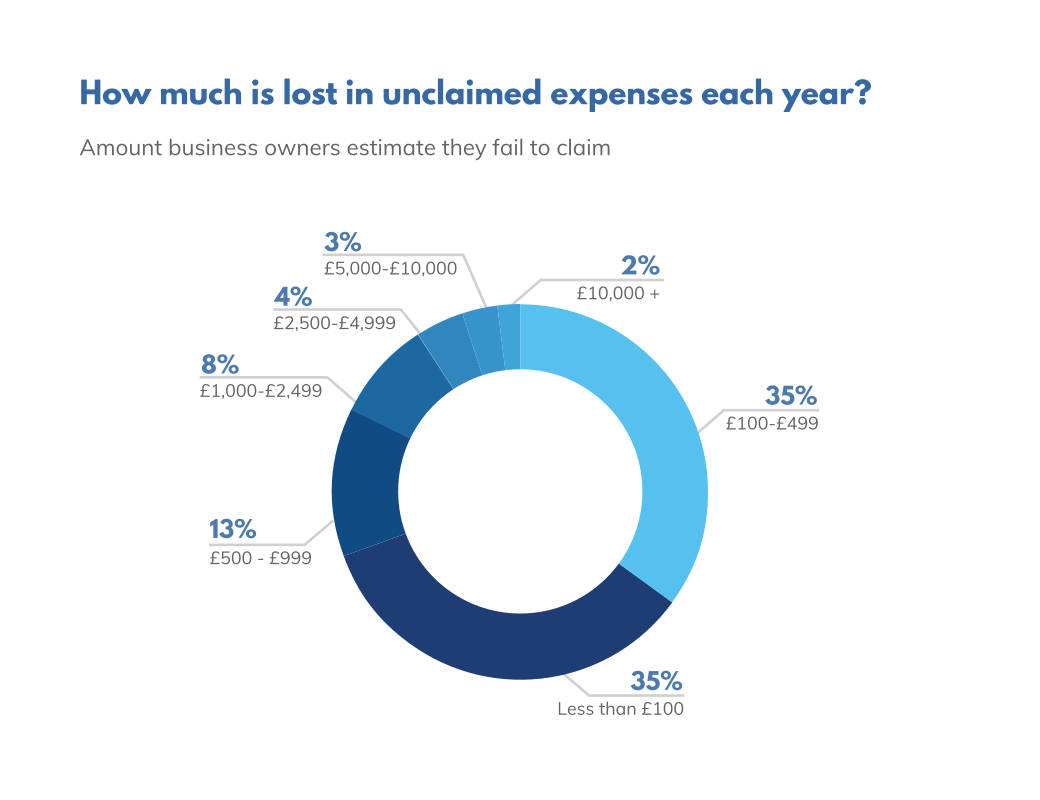
Recording all the money you spend on your business means you’ll be able to claim tax relief by clawing back any allowable expenses. Huge numbers of business owners go without claiming tax relief on their business expenses every year – don’t be one of them!
Up-to-date financial records will also help you monitor what you owe, what you’re owed, and spot areas where you could save. You’ll find it much easier to manage your cash flow, too.
What bookkeeping records do I need to keep?
Your records will generally show every transaction that happens in the business. This means every invoice you send and receive, your banking transactions, expenses, and everything that goes with them.
The amount of information you record in your bookkeeping will depend on the size of your business, and how many transactions there are. It can be a lot of information, because your records will need to include things like:
- The date of the transaction
- The amount
- What it was for
- Who the customers and suppliers are
- Your business might also deal with overseas transactions, so you’ll have the tax implications of this to consider, as well as multiple currencies too!
With all that data flying round you can see why bookkeeping can be such a laborious job, although using bookkeeping software (like our very own Pandle!) can significantly speed this up.
As well as logging the transactions, your bookkeeping records must also include the supporting documents which go with them. So, as well as a list of invoices, you’ll need the actual invoices, for example.
Bookkeeping for sole traders and limited companies
It’s also worth considering how your business structure affects the records you keep. As a sole trader there’s no legal difference between you and the business, so your business’ profits are yours to keep, which has implications for tax. We have a specific guide about bookkeeping for sole traders.
As a director you’re separate from your company, so you’ll need to report the business’s finances, as well as your own income.
Are bookkeeping and accounting the same thing?
The terms bookkeeping and accounting are often used interchangeably, but the two roles provide different functions.
- Bookkeeping deals with the day-to-day financial activity of a business, recording what happens and managing cash flow.
- Accounting uses bookkeeping information to analyse and report on how the business is doing, and helps decision-makers take the right action at the right time.
Both are utterly essential for the ongoing success of a business, and make it easier to see what’s working in a business and which areas need more attention.
Should I outsource my bookkeeping?
You don’t have to do your own bookkeeping, and can outsource it to someone else, or hire someone to do it in-house for you. It’s up to you who you choose, but going for someone suitably qualified as a bookkeeper or accountant will save you a lot of time and effort.
Can I do my own bookkeeping?
If you’re a sole trader or run a small company then your bookkeeping is likely to be fairly straightforward. There are no rules that say you have to outsource your bookkeeping, so doing it yourself (or using software which makes it easier) can save you money. Be honest with yourself about your abilities – and about where you really will spend your time.
How often should I do my bookkeeping?
Everyone sets out with good intentions, but bookkeeping is one of those things that really should be done regularly. Definitely don’t wait until your tax return is due before getting your books in order!
Making sure your bookkeeping is as current as possible helps avoid confusion or errors later on. If you’re not going to outsource your bookkeeping (or get someone in-house), shop around for bookkeeping software which will help you stay up-to-date.
For example, bank feeds will connect your records and bank account, pulling transactions through into your bookkeeping so you don’t need to enter them manually. Some software will even use this process to cut down on time-consuming bank reconciliation checks.
Tips to stay ahead with your bookkeeping
Your bookkeeping is the basis of the information you need to include in your tax return (Self Assessment, Company Tax Return, VAT return…the works). Rather than risking penalties and stress, our bookkeeping team have some basic techniques to help you keep things on track.
Decide how you’ll keep records
You’ll need some sort of system for recording your expenses and cash flow. You could do this by writing it down in a book, using a spreadsheet, or with software. HMRC are rolling out Making Tax Digital (MTD) – a new requirement for keeping digital tax records.
Some businesses are already affected by this, although you might choose to enrol in MTD voluntarily. Using digital bookkeeping will give you a head start!
Keep track of important dates
Set reminders for all of the key dates you’ll need throughout the year. These should include submission and payment deadlines to help you avoid penalties and interest payments, as well as other key dates – like payroll or loan repayments. There are different submission deadlines depending on your business structure, so take a look at our key tax year dates for businesses.
Separate business and personal finances
Though you’re not legally required to have a business bank account unless you’re a limited company, you might find it easier to have one.
Having your personal and business finances separate will make it easier to watch your cash flow and claim expenses. You won’t have to go through each transaction and remember whether it was for work or not.
Keep all your receipts and invoices
Store all the documents that go with your bookkeeping records. It makes life easier if there are any questions in the future, and it’s an HMRC requirement! The graphic below shows how much is lost to unclaimed business expenses each year – it’s pretty eye-opening!
Complete and review your bookkeeping regularly
If you wait until you have time to deal with your bookkeeping, you’ll probably never actually do it. As a small business owner there are responsibilities coming out of your ears, but bookkeeping is just as important as the rest of them.
Keep your information up to date, and make sure you take time to review your financial reports (sometimes known as management accounts) regularly. Good bookkeeping software will generate financial reports automatically, helping you take more effective action in the business.
Take advice from a professional
If you aren’t a qualified bookkeeper, ask your accountant for some advice. They’ll also be able to help you set up a system which you can actually use and understand, if you’re doing it yourself.
Save for your tax bill
Whether you’re a sole trader or a limited company, always make sure you can pay your tax bill on time! Put money aside from every sale, so you can save for your tax bill as you go. Our article about UK tax explains this year’s rates and thresholds to help you prepare. And don’t forget about National Insurance!
If you’re a director you’ll need to think about what tax means for both you and for your company. Company directors normally need to submit a Self Assessment tax return for their own income, as well as a Company Tax Return to pay any Corporation Tax from the business. Good bookkeeping will help you prepare for both!
Call 020 3355 4047 to talk to one of the team about our online accounting and bookkeeping services, or get an instant online quote.
Want to learn more?
Subscribe to our newsletter to get accounting tips like this right to your inbox


0 Comments
Oldest
Read more posts...

The Accountancy Partnership – Our Positive Reviews
17th May 2026We’re proud of our customers’ reviews here at The Accountancy Partnership The reviews we receive from our customers show how hard we…
Read More
Tax for Creators and Patreon Users
30th April 2026Are you working as a creator? Perhaps as an artist, musician, writer, game designer, or even a podcaster? If so, it’s perfectly…
Read More
What is a Company Shareholder?
29th April 2026A shareholder is someone who, quite literally, holds shares in a limited company. Shares are basically units of ownership, so if you…
Read More

×

What else is included in our accountancy packages?
If you have any questions about our services please call us on 020 3355 4047

Unlimited support via phone or email

Automated reminders for your important deadlines

Annual tax efficiency reviews to reduce your tax bill

Proactive checks of your bookkeeping on Pandle

Automated bank feeds to speed up your bookkeeping

Live chat support on our bookkeeping software

Mobile app to invoice customers & upload receipts

Free representation during a HMRC investigation
Confirm Transactions
The number of monthly transactions you have entered based on your turnover seem high. A transaction is one bookkeeping entry such as a sale, purchase, payment or receipt. Are you sure this is correct?
Please contact our sales team if you’re unsure
VAT Returns
It is unlikely you will need this service, unless you are voluntarily registered for VAT.
Are you sure this is correct?
Call us on 020 3355 4047 if you’re not sure.
MTD IT Quarterly Updates
Your final, end of year MTD Income Tax submission is included in your fee, without this add-on service.
We would recommend you submit the quarterly updates yourself using Pandle or alternative bookkeeping software.
However, if you would prefer us to submit these quarterly updates for you, there is an additional fee of £35.00 per month.
Call us on 020 3355 4047 if you’re not sure.
Bookkeeping
You will receive our bookkeeping software Pandle for free, as part of your package.
You can use this to complete your own bookkeeping, or we can provide a quote to complete your bookkeeping for you.
Please select and option below:
Call us on 020 3355 4047 if you’re not sure.