
Becoming a freelance consultant could potentially be a great professional move for you – but how do you go about it? In this blog post we’ll go over a few tips to help you transition into a freelance consultancy career, starting with why it might pay to start as a side hustle before taking the leap into full-time self-employment.
The benefits of starting small
Just because you’ve decided to forge a career as a freelance consultant doesn’t mean you need to dive straight in at the deep end. If you’re in a full-time job, for example, you might consider starting your consultancy as a side hustle so that you still have the security of regular wages. As long as your employer permits this, of course.
If you aren’t in a full-time job but still want to play it safe to start with, you could look for a part-time role or contract work to supplement your consultancy income.
Planning out what happens next
Allowing yourself this breathing space not only provides you with security as you grow your consultancy, but it also gives you time to think about some key considerations.
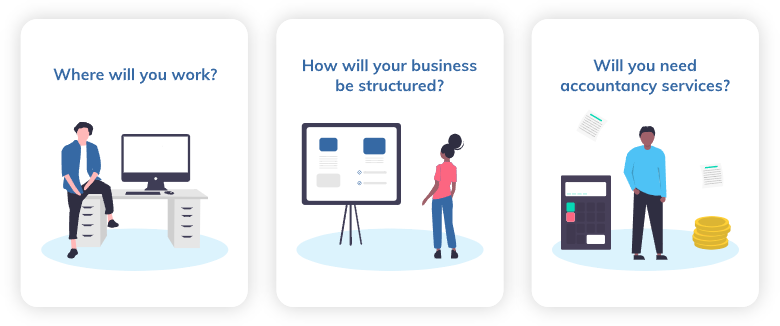
- Where you’re going to work: Are you going to work from home, or will you need to rent some office space?
- How you want to structure your business: Would you prefer to register as a sole trader or as a limited company? This is an important decision to make before you build real momentum.
- The accountancy services you might need: Are you going to need support with your business registration, tax returns and general financial strategy? Do you need help with your bookkeeping?
In the meantime, it’s all about building up your client order book!
What about paying tax?
The way a freelance consultant pays tax depends on the structure that’s used to register the business. Most people who are just starting out will choose between being a sole trader or setting up a limited company, but there are other options available and the structure you choose depends entirely on your circulstances and preferences! We explain all this in more detail in the link shown above, but you can also use our online calculator to compare how different structures affect the amount of tax you pay on your profits.
How do I find work as a freelance consultant?
You don’t need us to tell you that branching out on your own as a self-employed consultant can make financial pressure more intense. Without the security of a monthly salary to lean on it’s down to you to ensure there’s more money coming in than going out. This is vital if you’re going to generate a sustainable living and make a success of your consultancy career.
Once you get the ball rolling and sign up some clients, finding ongoing work can get easier. You’ll have more confidence, get better at selling yourself, and hopefully get some word-of-mouth recommendations to go with your growing portfolio. That said, marketing is the beast that never sleeps, so there are a few steps you can take to start off your marketing plan.
Do I need a website for my freelance consulting business?
There are pros and cons to setting up a website (like pretty much every other business decision). It can be expensive, having a rubbish one will put off more people than it wins over, and in some cases, you simply might not need one.
On the other hand, a good website can be the perfect digital basecamp to:
- Provide more information about the services you offer
- Help friends, family and existing clients share your business information with others
- Direct your social media posts and email marketing to
- House your case studies and testimonials.
What about social media?
The same goes for setting up social media profiles for your business. The effectiveness largely depends on your industry and which platforms you use. Professional social media platforms like LinkedIn can be fruitful as the people scrolling there are in a work mindset, and therefore more likely to connect and communicate within a work capacity.
Some people will also post vacancies on LinkedIn before they go to a recruitment agency or jobsite, so you might get a head start.
Join conversations, attend online events, interact with people’s content, and post your own original content; you never know where it might lead you. Other platforms such as Instagram, TikTok, Facebook and YouTube can be another way to share content.
Job boards and agencies
There are a whole host of websites dedicated to providing freelancers easy access to job listings and opportunities. If you find yourself struggling to secure work, don’t rule these out as another option. Just remember that some websites and agencies charge a subscription fee, or will deduct a percentage of your earnings – which will naturally cut into your running costs.
Good old-fashioned networking
It can be easy to rely on digital events and online opportunities, especially when there are so many of them out there, but there is still a great deal to be said for traditional, face-to-face networking.
Networking events give you the chance to meet likeminded people, build connections, and share what you offer with a concentrated, captive audience.
How much should I charge as a consultant?
One of the key considerations for anyone going self-employed is working out what to charge. The challenge comes in striking the balance between being more attractive than your competitors, but without underselling your skills and making too little money.
Some people calculate their rate by having a ballpark annual salary in mind and dividing backwards from there. Being flexible with this, within reason, is one way to maintain good client relationships and stay ahead of your competition.
It’s not a bad place to start but you should also consider:
- Industry trends
- What your competitors are doing
- Your skills and experience
- Costs, and at what point you’ll break even on them
- How growth will affect your pricing. For instance, if you need to take on staff, move premises, or register for VAT
Learn more about our online accounting services for startup businesses. Call 020 3355 4047 to chat to the team, or get an instant online quote.
Want to learn more?
Subscribe to our newsletter to get accounting tips like this right to your inbox