
Some limited companies are registered but then never trade, or they might do so only to stop trading after a period of time. These companies are sometimes referred to as dormant or non-trading, but although these terms appear to mean the same thing there are actually differences between the two.
Just to make things even more complicated, the definition of what is a dormant company depends on whether it’s for Companies House or for Corporation Tax purposes. Confused yet? We’ll guide you through the definitions, what they mean for you, and what you need to do.
What is a dormant company?
Being a dormant company means something different in the world of HMRC and Corporation Tax compared to the definition used by Companies House, so we’ll start there.
What is a dormant company according to Companies House?
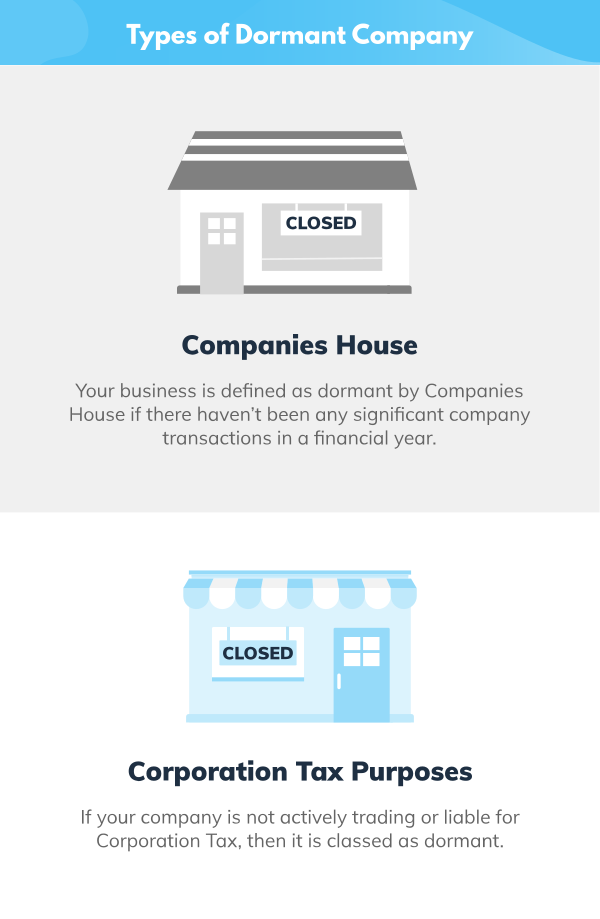
According to Companies House, a company is dormant if there haven’t been any significant company transactions in a financial year. Any filing fees or penalties you might pay to Companies House don’t count as significant transactions.
If these are the company’s only transactions, and there aren’t any other active transactions going into or coming out of the business, then Companies House considers it dormant.
Dormant for Corporation Tax Purposes
When talking about Corporation Tax, the definition of a dormant company is (you’ve guessed it) linked to your company’s Corporation Tax liability. If your company isn’t actively trading, or isn’t liable for Corporation Tax, then it’s dormant. For instance, a company could be considered dormant if it’s:
- A newly established company that hasn’t started trading yet
- No longer trading
- Formed purely to own an asset (such as land), and will never actually trade as a result
HMRC will also consider clubs and organisations dormant for Corporation Tax purposes even if they are active, as long as they owe no more than £100 in Corporation Tax or exist solely for the benefit of their members.
What’s a non-trading or non-active company?
From HMRC’s perspective, your company isn’t active for Corporation Tax purposes if it hasn’t started trading yet. You can still set up your company and get the ball rolling, it just means your company is considered inactive if trading hasn’t started.
As long as your company doesn’t engage in any profit-making activities, you can carry out early-stage business activities and still be considered not active. These early-stage activities might include:
- Writing business plans
- Negotiating contracts
- Identifying the viability of the business in order to better understand if you want to carry on with your venture or not
You might also decide to register a company name just to have it for the future or to protect the name. The company will be inactive until you decide to do something with it.
Can a dormant company trade?
As a dormant company you can’t actively trade or carry out activities to drive profit – which also translates as undertaking any significant transactions. The purpose of registering a company as dormant is to close down the majority of any business and financial activities. If you do decide to start trading again, you’ll need let HMRC know.
Get in touch to find out more about our online accounting services. Call 020 3355 4047, or get an instant online quote.
Want to learn more?
Subscribe to our newsletter to get accounting tips like this right to your inbox





When a company is declared “non trading” can it pursue outstanding debts?
Hi Allan,
Thanks for your message!
Yes, a UK company that is non-trading can generally still pursue debts that arose while it was trading. The distinction between non-trading and dormant is important though.
I hope that helps but please do let me know if you there’s anything at all we can do for you.
Best wishes
Elizabeth