There’s lots of accounts terminology to work around when running your own business, so in this article we explain the term ‘cost of sales’ – also known as ‘cost of goods sold’, or COGS for short.
What does ‘Cost of Sales’ mean?
In accounting terms the cost of sales or ‘cost of goods sold’ (COGS) refers to how much it costs a business to make a sale. Unlike expenses, which tend to relate to more general costs such as renting premises, COGS directly relate to individual sales.
What kind of thing should I include to work out my cost of sales?
The cost of a sale might include how much you spend on:
- Stock
- Raw materials to make products
- Materials for a builder
- Subcontractors carrying out the core service on offer
You should include these in your COGS calculation even if you don’t actually pay for them at the same time as making the sale. It’s also worth noting that lots of expenses are ‘allowable’, which means you can claim for them on your tax return, and reduce the amount of tax you pay.
Why is cost of sales important?
The amount of money you spend in order to produce products or sell services to your customers eats into the amount of profit that you can make. Knowing how much you spend each time you make a sale will help you understand how efficiently the business operates, or where the business needs more attention. It’s also a key part of understanding gross profit.
Gross profit is the total amount you make through sales, minus the cost of making those sales.
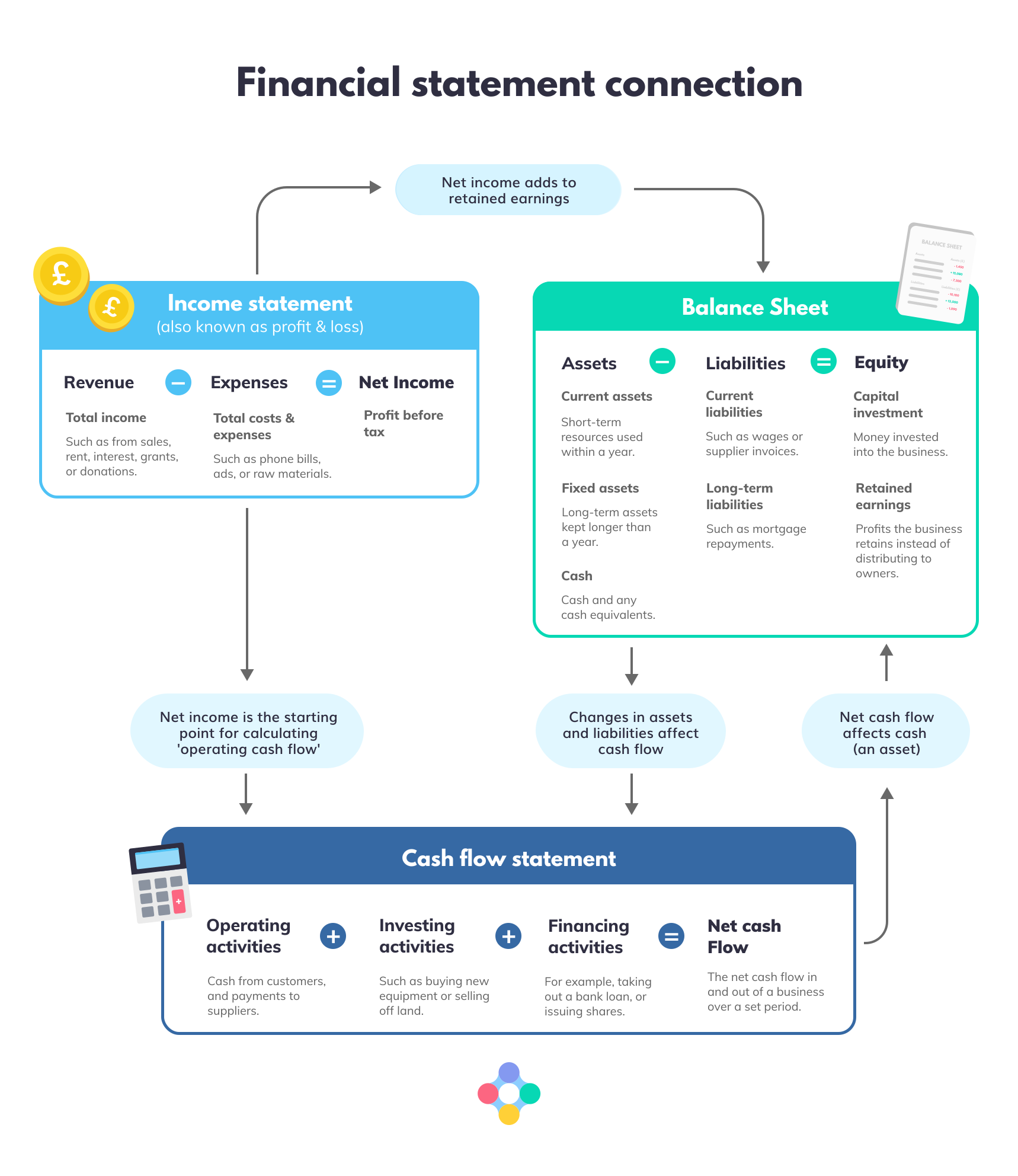
Looking at gross profit as a percentage will help you understand if your pricing is correct. For example, retailers typically have a 50% to 70% gross profit margin. If the profit margin is only around 20% then this can indicate that the cost of sales is too high, or the retail price is too low, so it will give you something to focus on and make improvements. The graphic below shows how these different elements come together across your financial reports, to help you understand the relationship.
It’s one of many reason why good bookkeeping is so crucial. Categorising the items that you buy and sell helps you identify exactly where there are costs, and where you’re making money. It will help you calculate the cost of sales more accurately, helping you iron out problems in your gross profit margins.
Learn more about our online accounting services for businesses. Call 020 3355 4047 to chat to the team, and get an instant online quote.
Want to learn more?
Subscribe to our newsletter to get accounting tips like this right to your inbox