
Freelancing and self-employment offer flexibility, independence and the opportunity to build a career on your own terms. But in an uncertain economy, working for yourself can also come with growing pressures.
To better understand the challenges facing freelancers today, we surveyed 1,060 freelancers and self-employed individuals across a range of industries.
From financial concerns and unpaid work to the rise of AI, the results reveal the biggest frustrations facing self-employed workers – as well as the reasons many continue despite them.
The biggest threats facing small business owners right now
When asked about the single biggest threat in their industry, one response stood out clearly above the rest.
- Finding consistent work – 43.6%
- Businesses using AI instead – 13.9%
- Late or non-payments from clients – 10.9%
- Rising software costs – 8.2%
- Energy bills rising – 5.9%
- Lack of employment rights – 4.5%
- Other – 12.9%
Nearly half of respondents identified finding consistent work as the biggest challenge, highlighting how income stability remains a key concern for self-employed businesses.
Among the additional responses, many pointed to broader economic pressures such as inflation, rising material costs, increasing taxes, government policy changes, and regulatory complexity.
External pressures affecting self-employed business owners in 2025
Freelancers and business owners were also asked which external factors had the biggest negative impact on their work over the past year.
Biggest external challenges
- Clients cutting budgets – 44.8%
- Inflation and rising household bills – 31%
- HMRC or tax administration – 30.3%
- Increased competition – 20.4%
- Platform fees or algorithm changes – 12.7%
- Other – 7.6%
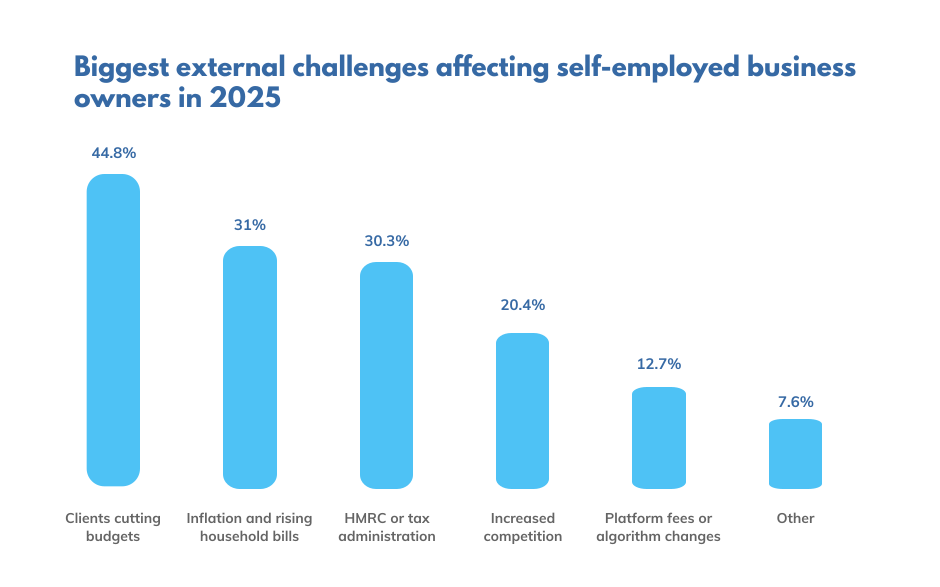
Nearly half of freelancers and self-employed businesses (44.8%) say clients cutting budgets have had the biggest negative impact on their work, reflecting the wider economic climate and reduced spending across many industries.
However, these challenges vary significantly depending on the industry they work in.
Property industry most affected by tax pressure
While client budgets were the most widely noted issue overall, tax administration and compliance pressures are particularly significant in property-related industries.
When asked if tax administration had a negative impact on their work, nearly half (44.7%) of that sector agreed.
Property professionals, landlords and investors often face additional administrative requirements compared to many other sectors. Policy changes affecting landlords include adjustments to mortgage interest tax relief, increased reporting requirements with the introduction of Making Tax Digital Income Tax, and evolving tenancy regulations which have added further complexity to managing property-related income.
As a result, tax administration is frequently said to be a major frustration among property professionals, who must often balance property management with increasingly detailed compliance and reporting obligations.
Creative and digital sectors face client demand challenges
For self-employed people working in creative and digital industries, the biggest challenges tended to centre around client demand and competition.
Just over half (50.2%) of respondents mentioned client budget cuts as the biggest challenge affecting their work, which is often project-based.
Client budget cuts and fluctuating demand can quickly affect income stability, which may help explain why inconsistent work and reduced client spending were among the most common concerns raised across the survey.
At the same time, creative sectors are also experiencing rapid technological change, with some respondents highlighting AI tools and automation as emerging pressures in their industries. Nearly a third (28.7%) believe AI will negatively affect the sector and their jobs.
While nearly a third of creatives (30.3%) say that being self-employed provides better work-life balance, nearly half of creatives say that they often work at least five hours of unpaid work a week, with over half (53.8%) of these saying specifically that it’s at least ten hours a week.
Construction and trades mostly impacted by rising costs
Businesses working in construction and trade-related roles are generally more exposed to the rising cost of materials, supply chain disruptions, and fluctuating demand within the housing market.
The survey showed nearly half (46.6%) of construction workers find inflation and rising household bills have the biggest negative impact on their work in 2025, highlighting the financial pressures facing small operators across the sector.
Healthcare professionals discuss rising stress and unstable workloads
Over half (55.9%) of health and fitness professionals, which includes locum doctors, dentists, personal trainers, and nutritionists voted inconsistent work the biggest threat to their industry, highlighting the financial uncertainty facing independent health practitioners.
On top of this, more than one in three medical professionals (41.2%) say tax administration has negatively impacted their work. This could be due to the added responsibility for all aspects of the job, such as managing bookings, invoicing, tax reporting, and compliance.
The administrative side of self-employment can take up significant time, particularly in sectors where professionals are primarily focused on delivering care.
The personal impact of external pressures on small business owners
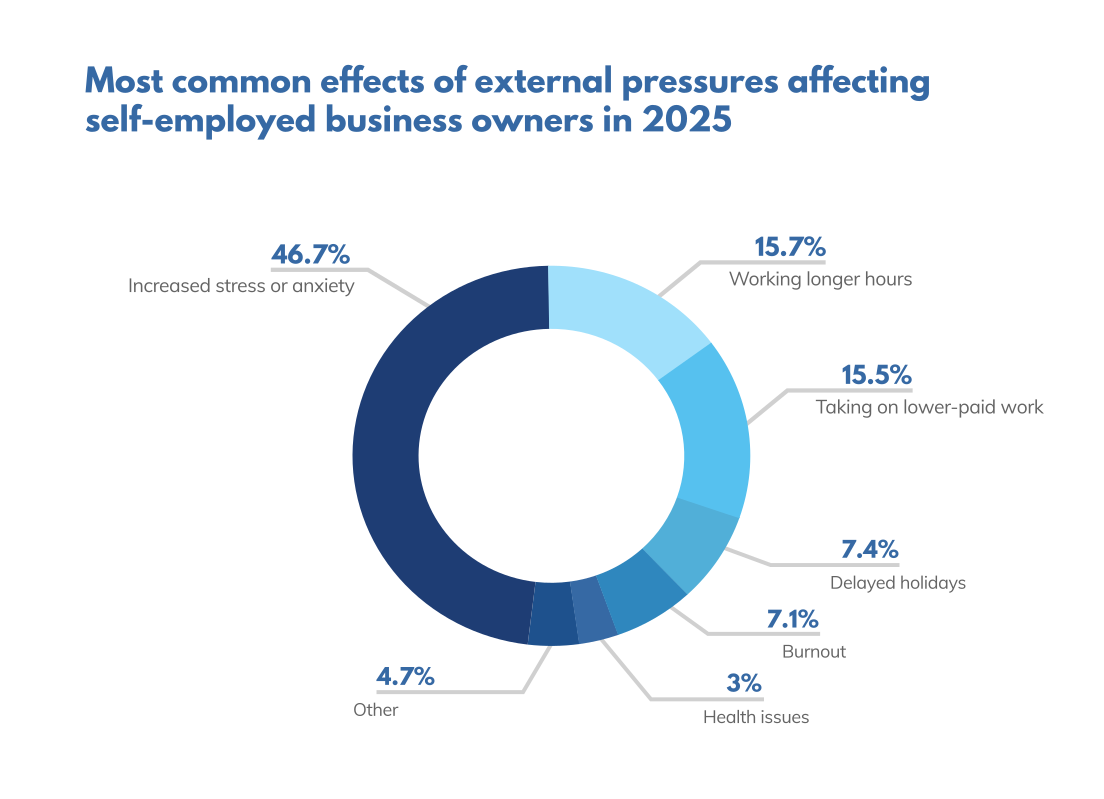
Financial uncertainty and increased competition are having a clear impact on business owners personally. Those surveyed reported the most common effects as:
- Increased stress or anxiety – 46.7%
- Working longer hours – 15.7%
- Taking on lower-paid work – 15.5%
- Delaying holidays or time off – 7.4%
- Burnout – 7.1%
- Health issues – 3%
- Other – 4.7%
Almost half of business owners report increased stress or anxiety, with the financial pressures of self-employment affecting wellbeing across the sector.
Industry differences
Although challenges were felt across the board, some industries are more exposed to economic and regulatory changes than others.
For example, those working in construction face added pressure from rising material costs, while changing housing regulations and evolving tax rules affect landlords and property investors.
In recent years, government policies such as changes to mortgage interest tax relief, stricter compliance requirements for landlords, evolving tenancy regulations, and the move to Making Tax Digital reporting for property income have all increased administrative complexity for many who receive income in the property sector.
Combined with rising interest rates and maintenance costs, these changes may help explain why many businesses in property-related roles report higher levels of financial pressure.
In comparison, freelancers in creative and digital industries are more likely to face challenges related to competition, AI adoption, and fluctuating client demand.
Why business owners still choose self-employment
Despite the challenges, most business owners report they still value the independence and flexibility their careers provide.
Best things about self-employment
- Better work-life balance – 31.1%
- Flexibility around family responsibilities – 24.4%
- Location independence – 17.5%
- No manager or boss – 17.5%
- Ability to avoid unwanted clients or work – 6.4%
- Other – 3.1%
Respondents also pointed to the potential to earn more without an employer to put a ceiling on income.
Work-life balance since becoming self-employed
More than half of respondents said their work-life balance has improved since becoming self-employed.
- Improved – 52.6%
- Stayed the same – 26.9%
- Worsened – 20.5%
Are self-employed people considering returning to employment?
The pressures of the past year have led some small business owners and freelancers to reconsider their career path.
When asked if they had considered returning to regular employment:
- No – 47.3%
- Yes, briefly – 34.3%
- Yes, seriously – 16.4%
- Already looking for a job – 1.9%
The responses show most remain committed to self-employment, but over half (50.7%) have at least considered returning to traditional employment.
The reality of unpaid work when you’re self-employed
Unpaid work continues to be a widespread issue for business owners in many industries.
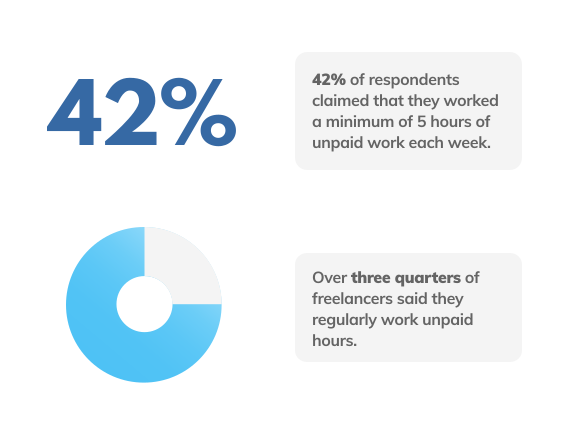
42% of respondents claimed they worked a minimum of 5 hours of unpaid work each week, with over three quarters of self-employed people regularly working unpaid hours.
When asked whether unpaid work is expected in their industry:
- Yes – it’s expected – 41.6%
- Sometimes, and it’s getting worse – 29.3%
- No – it’s avoidable – 21.3%
- Unsure – 7.7%
These responses suggest that while unpaid work is widely experienced, many business owners and freelancers feel it has become an accepted (and in some cases, growing) part of the job.
Why small businesses lose clients
Those running their own businesses say pricing and budget issues are the most common reasons they lose clients. Around three in ten respondents (29.7%) said their pricing or fees can be a deciding factor, while 27.5% said clients simply don’t have the budget to continue working with them.
Competition in crowded markets also plays a role, with 17.3% pointing to market saturation.
Communication can be another challenge, with 16.2% saying a lack of clear communication has led to lost clients. A smaller number (5.6%) said some clients ultimately choose to bring work in-house instead.
The results suggest tight budgets and increasing competition are the biggest reasons SMEs lose clients.
Financial security over the next year
Business owners were asked how secure they feel about their finances over the next 12 months. With income often fluctuating from project to project, financial stability can be a major concern for many working independently.
The responses suggest that while most self-employed and freelancers feel cautiously optimistic about the year ahead, there is still a noticeable level of uncertainty about longer-term financial security.
Financial security outlook
- Very secure – 15.2%
- Somewhat secure – 55.7%
- Not very secure – 24.3%
- Not secure at all – 4.9%
Overall, the majority of respondents said they feel somewhat secure about their finances, but concerns remain for a significant minority. Nearly a quarter said they do not feel very secure financially, while 4.9% said they do not feel secure at all.
Ultimately, this means almost three in ten small business owners feel financially insecure long-term, highlighting the ongoing uncertainty of self-employment.
Confidence about earning in the year ahead
Business owners were asked how confident they feel about matching or exceeding last year’s profits.
- Confident – 66.2%
- Not confident – 33.9%
While over half (66.2%) expressed at least some confidence, nearly a third (33.9%) said they are not very confident about their profits this year.
It suggests that while there is confidence around earning potential, rising costs are likely to impact financial security.
Will AI help or harm small businesses?
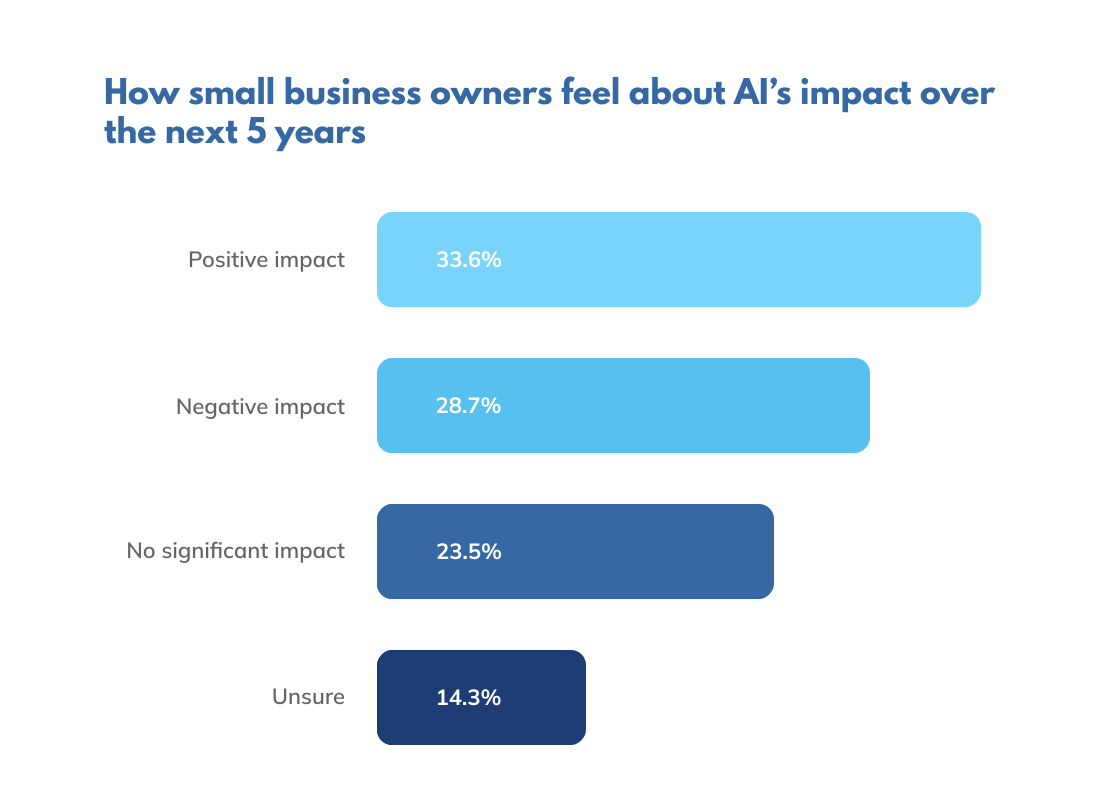
Artificial intelligence is already beginning to influence many industries. When asked about its impact over the next five years, small business owners voted on how they feel:
- Positive impact – 33.6%
- Negative impact – 28.7%
- No significant impact – 23.5%
- Unsure – 14.3%
These results suggest self-employed business owners are divided on AI, with many unsure whether it will create new opportunities or replace existing work.
AI concerns among creatives
Creative professionals were the largest group represented in the survey, and many are worrying about how new technologies may affect their work and the demand from clients.
The survey found over 2 in 5 creatives (43.3%) believe AI will have a negative impact on their role, reflecting growing uncertainty across industries such as marketing, writing, design, and the arts.
However, views across the sector aren’t all the same. Around 1 in 5 creatives say they believe AI will have a positive impact, while others expect the technology to reshape the industry without completely replacing human creativity.
The impact of tax administration on small business owners
While much of the pressure highlighted in the survey relates to client budgets, inflation and competition, many self-employed people and freelancers also pointed to tax administration and compliance as a growing challenge.
Over 3 in 10 self-employed people (30.3%) said HMRC processes or tax administration had a negative impact on their work in 2025, suggesting financial paperwork and reporting obligations are taking up significant time for many.
For those managing their own bookkeeping, invoices, and tax returns, these responsibilities often sit alongside client work and business development.
Administrative tasks increasingly include areas such as the new digital reporting requirements, understanding what allowable expenses they might claim, and tax reporting and identity verification changes.
As tax rules evolve, staying compliant can add another layer of admin for those running their own business, adding more confusion than ever before.
Rationale
Self-employment continues to offer benefits such as flexibility, independence and improved work-life balance. It’s essential that concerns around rising costs and unpaid work can be addressed to help protect small business owners, and the industries reliant on them.
Learn more about our online accounting services for businesses. Call 020 3355 4047 to chat to the team, and get an instant online quote.
Want to learn more?
Subscribe to our newsletter to get accounting tips like this right to your inbox