
The 2025 Autumn Budget announced plans to change various UK tax policies, rates, and thresholds which affect small businesses, employers, and the self-employed. In this article we highlight key areas of this year’s Budget, and what sort of impact this will have on anyone running their own business.
Business rates
Business rates are a type of tax charged by local authorities on non-domestic properties, such as shops and offices. The government sets a ‘multiplier value’, which is multiplied by the property’s rateable value to work out what the occupier needs to pay.
In 2026/27 the standard multiplier (due for properties not eligible for small business relief) will decrease from 55.5p to 48p.
The small business multiplier
The small business multiplier is charged on properties with a rateable value below £51,000. In 2026/27 the multiplier will fall from 49.9p to 43.2p, and the Small Business Rates Relief (SBRR) grace period has been extended from one to three years for businesses extending into a second property.
Rates relief for retail, hospitality and leisure properties
The multiplier for eligible business properties in England relating to the retail, hospitality, and leisure (RHL) industry will be permanently lower than national rates. In 2026/27 the rates will be:
- Small business multiplier for RHL: 38.2p
- Standard RHL multiplier: 43p
High-value business multiplier
The Autumn 2025 Budget announced the introduction of higher business rates on properties with rateable values of £500,000 and above, which will be set at 50.8p in 2026/27. It makes it more important than ever to consider the location and size (and therefore the property’s value) of your business premises.
Film studios business rates relief
Eligible film studios in England will continue to receive a 40% reduction on their business rates bill until 2034.
Capital allowances
Businesses can use capital allowances to claim tax relief on the cost of maintaining eligible assets over a long period of time, such as vehicles, machinery, and equipment.
The type of relief available varies depending on the sort of capital allowances used. From April 2026:
- The main rate of writing-down allowances will decrease from 18% to 14% (so less tax relief is available using this type of allowance from April 2026)
- A new type of 40% First Year Allowance on main-rate assets incurred from 1st January 2026. Unlike most other types of First Year Allowances, this will include expenditure by unincorporated businesses (such as sole traders or partnerships) and assets used for leasing. So if you’re planning any purchases in those categories, it might be best to wait for the new year!
- 100% First Year Allowances (FYA) for qualifying expenditure on zero-emission cars and their associated chargepoints will now be in place until March 2027 for companies, and April 2027 for income tax purposes
Capital Gains Tax for businesses
Several changes announced at the budget affect the way business owners dispose of assets, particularly if they’re selling their business.
Business Asset Disposal Relief (BADR)
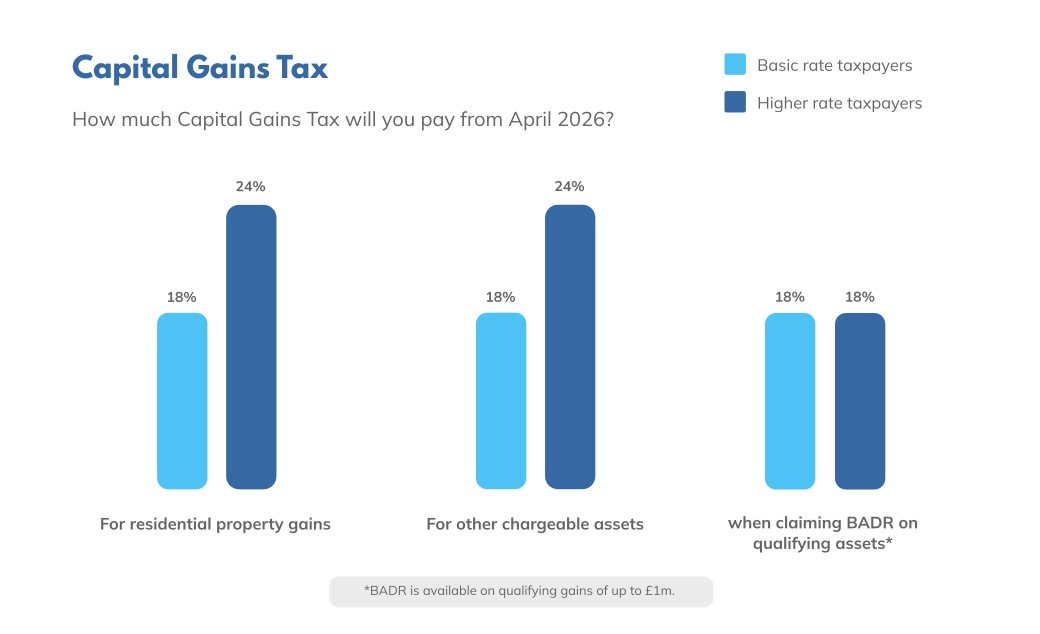
Someone disposing of an asset and triggering Capital Gains will normally pay Capital Gains Tax starting from 18% if they’re a basic rate taxpayer, or 24% for a higher rate taxpayer. Until now, Business Asset Disposal Relief meant an individual operating a business and disposing of an asset would pay CGT at a rate of 10%.
From 6th April 2026 the rate of CGT even when using Business Asset Disposal Relief will increase to 18%. It’s still a discount for higher rate taxpayers (though not as much), but basic rate payers will lose their advantage. So, if you’ve been considering getting rid of those business assets, including any shares or the business itself, it might be worth thinking about the timing of this.
Employee Ownership Trusts
Employee Ownership Trusts are sometimes described as an alternative to Business Asset Disposal Relief, because they allow a business owner to sell their shares to a trust set up for the benefit of all employees. Putting your shares into one of these trusts previously meant you were 100% exempt from paying Capital Gains Tax on the disposal, but this has now been reduced from 100% to 50% with immediate effect.
Incorporation relief claims process
Transferring personally owned assets to a business when you incorporate it (form a limited company) can sometimes trigger Capital Gains Tax (CGT) on any gains you make. The tax relief to cancel this out was previously paid automatically, but from 6th April 2026 anyone transferring assets during incorporation will need to actively apply for relief.
Corporation Tax
The rates of Corporation Tax remain unchanged, but the penalties charged for submitting your Company Tax Return late will double with effect from 1st April 2026.
Dividend Tax
Shareholders normally pay Dividend Tax on any dividends they receive from a company’s profits which are above their £500 tax free allowance. The rate of Dividend Tax payable will increase from April 2026:
- Basic rate: 10.75% (increasing from 8.75%)
- Higher rate: 35.75% (increasing from 33.75%)
- Additional rate: No change, remaining at 39.35%
Electric vehicles
Electric Vehicle Excise Duty (eVED) – Mileage tax rates for electric cars
The Autumn Budget announced the introduction of a brand new mileage tax for electric vehicles. Expected to come into force from April 2028, the tax works out at £0.03 per mile for battery electric cars, and £0.015 per mile for plug-in hybrid cars.
Other types of vehicles, such as vans, will be ‘out of scope’ when it’s introduced, so won’t be affected (or at least, not straight away). This might affect decisions around what type of vehicle you use for your business.
Tax relief for buying electric vehicles and installing chargepoints
100% First Year Allowances (FYA) for qualifying expenditure on zero-emission cars and their associated chargepoints will now be in place until March 2027 for companies, and April 2027 for income tax purposes
Grants for buying electric cars
The Electric Car Grant gives up to £3,750 off the cost of buying an eligible electric car. The scheme was originally expected to run out in 2028, but it will now run until 2030.
Income tax thresholds
UK income tax thresholds will remain frozen at their current amount until April 2031. Wages will continue to increase though, so this means more people can expect to pay tax on more of their earnings.
National Insurance changes
National Insurance thresholds for employees and self-employed people
Changes to the National Insurance thresholds for self-employed people and employees will take effect from April 2026.
- Lower Earnings Limit (LEL): Employees won’t pay NI on earnings above this threshold, up to the £12,570 Primary Threshold, but they will earn NI ‘credits’ and accrue benefits as if they had paid. The LEL will increase to £6,708 per annum from £6,500.
- Small Profits Threshold (SPT): Similar to the LEL but for self-employed people, the SPT will be £7,105 per annum, increasing from £6,845
This might have an effect on what you pay employees, or how you take money out of your business if you’re a company director, if you want to earn NI credits without incurring NI.
Employer National Insurance contributions (NICs) relief for veterans
Employers may be able to claim zero-rated employer’s NI contributions for ex-forces veterans in their first year of a civilian job. The scheme was due to end April 2026 but will now run until April 2028.
National Living Wage and National Minimum Wage from April 2026
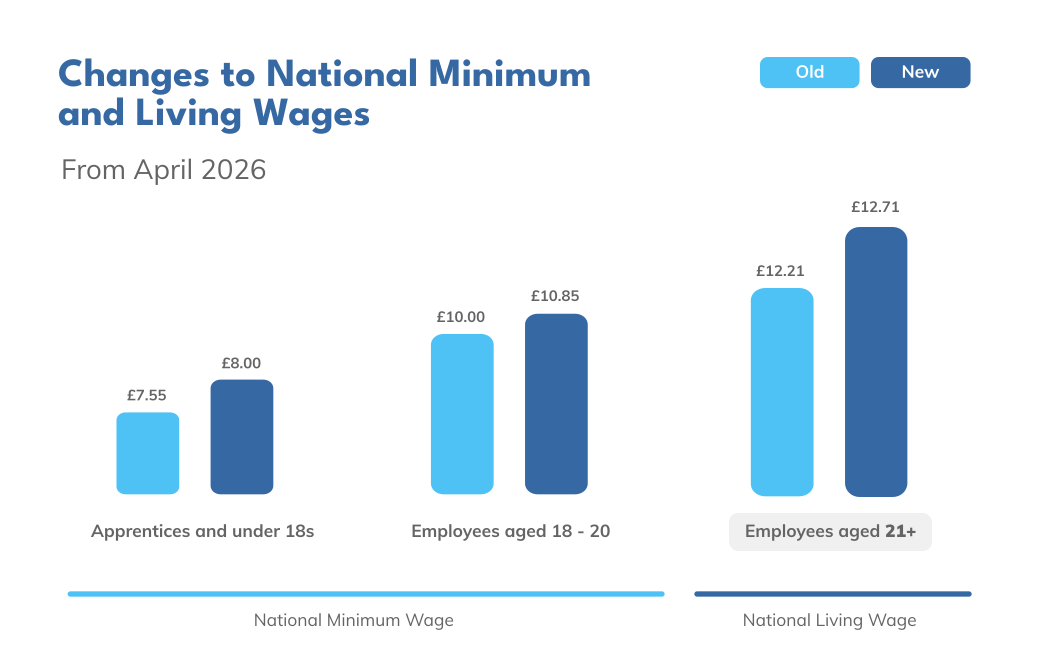
Employees who are aged 21 or older (and not a director or in the first year of an apprenticeship) must receive the National Living Wage. From April 2026 the minimum rate per hour will increase from £12.21 per hour to £12.71.
The rate of National Minimum Wage which is payable to apprentices and under 21s will also increase:
- Apprentices and under 18s: From £7.55 per hour to £8.00 per hour
- 18 to 20 year olds: From £10.00 per hour to £10.85 per hour
Pension contributions made through salary sacrifice schemes
Some employers operate salary sacrifice schemes, allowing employees to sacrifice part of their salary in exchange for something else. Swapping part of their salary like this reduces the amount left to pay tax on, so both the employee and employer can reduce their tax bill.
Salary sacrificed employee pension contributions are a good example, but this will change from April 2029 when only the first £2,000 of contributions will be exempt from National Insurance. As well as affecting salaried employees, this will have an impact on the way company directors make pension payments in order to be tax efficient.
Property tax
The Budget also announced that property income will now be taxed more heavily than other forms of income, with a new property income tax rate. The new rates will take effect in England, Wales and Northern Ireland from April 2027:
- Basic rate: 22% (increasing from 20%)
- Higher rate: 42% (increasing from 40%)
- Additional rate: 47% (increasing from 45%)
Profits earned on properties owned through a limited company will continue to be covered by Corporation Tax, so it’s worth chatting to your accountant about the most tax-efficient way for you to own your property.
S455 Tax for companies with director’s loans
S455 is a rate of UK Corporation Tax charged to limited companies on the outstanding amount of a director’s loan which is unpaid after the permitted time period (nine months and one day from the company’s accounting year-end). The rate is attached to the higher rate of dividend tax, so when this increases in April 2026, S455 will also increase to 35.75% at the same time.
Sugar tax – The Soft Drinks Industry Levy (SDIL)
The Soft Drinks Industry Levy (SDIL) is a tax the government charges on soft drinks to encourage producers to reduce how much sugar is in their products. Often referred to as the sugar tax, the threshold will change from 5g to 4.5g of sugar per 100ml. Soft drinks manufacturers have been given until 1st January 2028 to reduce the amount of sugar in their drinks if they are to avoid the levy.
Tax relief for working from home
If an employee works from home and their employer doesn’t reimburse them for home-working costs (like extra electricity or heating) they can currently claim tax relief for those expenses. This tax relief will be abolished from 6 April 2026.
VAT invoicing
VAT registered business will be required to issue VAT invoices as e-invoices from April 2029. The government are planning to release more information on this closer to the time.
Learn more about our online accounting services for businesses. Call 020 3355 4047 to chat to the team, and get an instant online quote.
Want to learn more?
Subscribe to our newsletter to get accounting tips like this right to your inbox