
Forward-thinking and future-proofing are second nature to most business owners, and your exit strategy is an essential part of this process.
What is an exit strategy?
Unlike some business lingo, an exit strategy is pretty much what it says on the tin. It’s your plan for how you will relinquish involvement in the business when the time comes.
For instance, if the business is being set up in order to deal with a specific project, how will you wrap things up once your objective is met? Or, if you want to retire from your business one day, what will you do with everything you’ve built?
Having an exit strategy helps you plan ahead for these considerations. It also helps any investors understand when and how they might see a return on their money (which can help you secure it in the first place).
The benefits of having an exit strategy for your business
There are several advantages to having an exist strategy in place for your business, helping you shape and steer the business towards whatever ultimate goals you have for it, such as:
- Getting it into a strong position to sell
- Showing potential investors what your plans are. It can improve your chances of securing funding if they can see how it might be worth their while.
- Preparing for any tax you might need to pay if you decide to sell the business
Different types of exit strategies
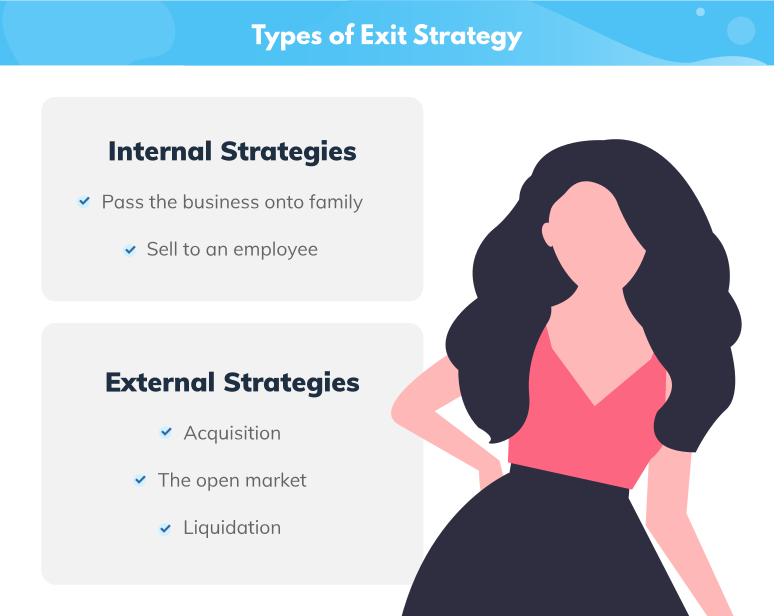
How you actually plan to leave the business depends entirely on what you want to get out of it. Your strategy might change over time as the business develops or when outside factors (like life!) change. Typically, exit strategies fall into two broad groups; internal, and external.
- An internal exit strategy sees the business transferred or sold within those already connected to it, such a family members or employees
- An external exit strategy essentially means planning on the involvement of outsiders when you leave or sell the business
Pass the business onto family
This is often a dream scenario for business owners. Handing the business over to family members means you can still feel connected to it, whilst continuing to provide for your loved ones. It’s quite a legacy.
- You might still be able to have some involvement in the business, and it can make for a smooth transition of ownership
- Working with relatives can challenge your personal life if things go wrong. There’s also the danger of overlooking unsatisfactory performance
Sell to an employee
Sometimes referred to as a ‘management buyout’, this option involves your management team or employees buying the business.
- Again, you might be able to retain a connection to the business if you want to. It can also be reassuring to know that the business is in the hands of those who already know it well.
- Existing staff might resent the new power dynamic, leading to problems in the business (though this isn’t necessarily your problem once you leave!)
Acquisition
An exit through acquisition means selling your business to another company. They might see buying your business as a means to expand, a way to diversify their offering, or simply to wipe out some of the competition.
- If another business wants to buy you out, they will likely want to acquire the business pretty quickly, making for a rapid sale. If there are multiple buyers interested in your business, you may even end up sparking a bidding war and selling it for more than your initial asking price.
- Taking this route sometimes leaves you vulnerable to being taken advantage of by companies who are simply trying to access your data. Also, if the sale is purely motivated by wiping out competition, you run the risk of the business being folded post-sale, and any employees losing their jobs.
Putting your business on the open market
This is one of the most popular options when it comes to exit strategies for small businesses. It involves putting the business up for sale for a specific asking price.
- If a business is attractive to buyers then a sale will be quick. Again, you may even experience a bidding war between a number of keen buyers and sell for more than you originally planned to. Assets can also be included in the sale, netting you an ever better price.
- In order to sell the business and, indeed, make a profit from it, the business will need to be in good shape. Nurturing a business to this point is not an easy process, and can take some time.
Liquidation
If selling or acquisition aren’t options, then liquidation involves closing the company and selling off its remaining assets. Liquidation tends to take place when the business relies solely on the operation of one person, but it can also happen when bankruptcy is looming.
- As long as the sale of any assets goes smoothly, the liquidation of a business is a fairly quick and uncomplicated process.
- If there are limited valuable assets to sell, or if sales are claimed by creditors who have first rights to the funds, then you could be left with very little.
How to choose your exit strategy
When considering which exit strategy is best for you personally, it’s worth thinking about two factors: money and legacy. If a financial return is your main motivation, then selling to another business or via the open market are both strong options. However, if you’re more concerned with seeing the business thrive and live on after you, then you might find it preferable to keep it in the family.
Learn more about our online accounting services for businesses. Call 020 3355 4047 to chat to the team, and get an instant online quote.
Want to learn more?
Subscribe to our newsletter to get accounting tips like this right to your inbox